Healthcare Marketing Agency vs Doing It Yourself: What a Solo or Small Practice Actually Needs
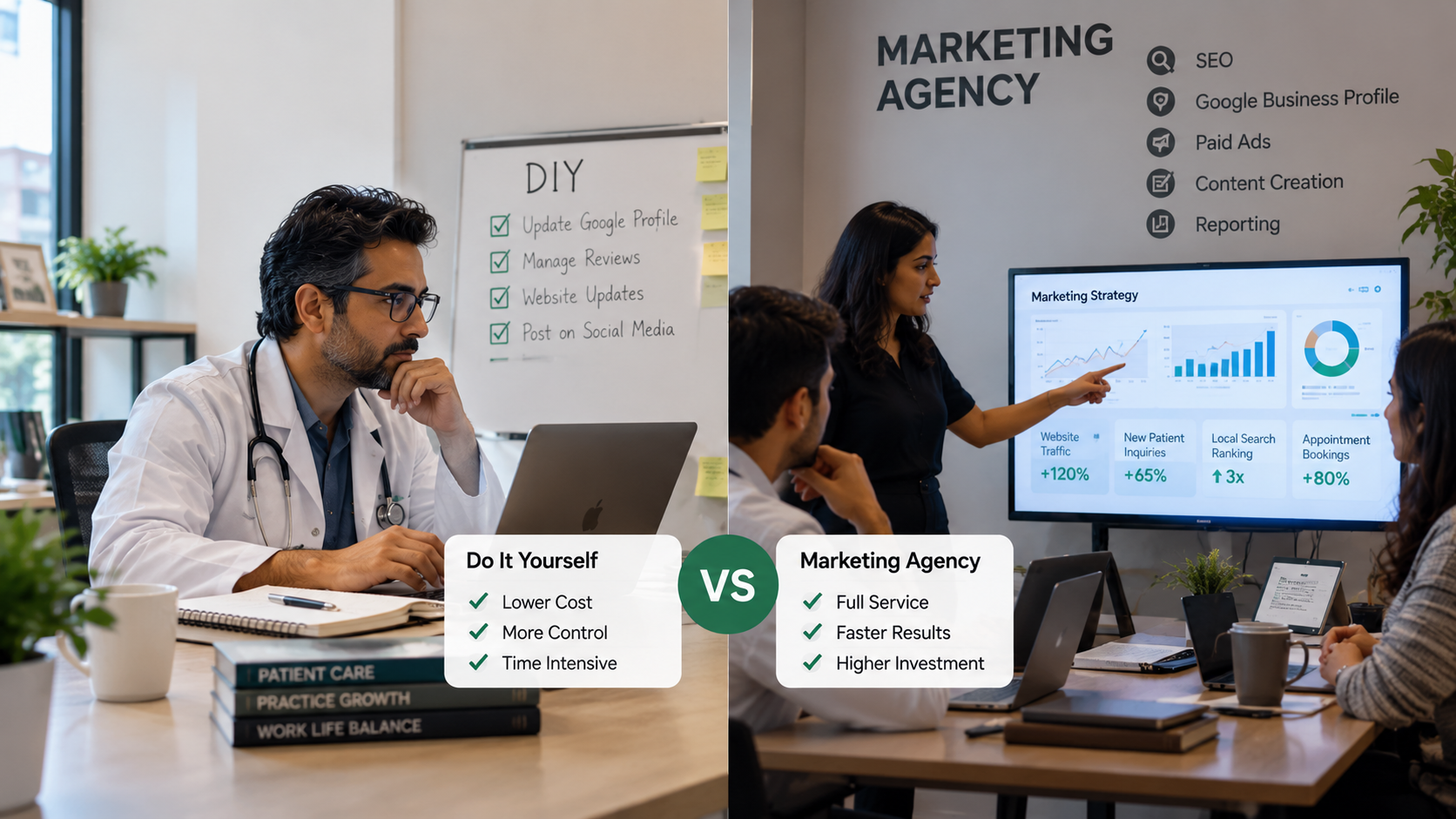
A healthcare marketing agency earns its cost when a practice has a real retainer budget and not enough in-house time to run marketing consistently. For a solo doctor or a two-person clinic watching every dollar, doing it yourself is often the more sensible starting point, at least until the practice outgrows what one person can manage alone.
Neither path is automatically right. A multi-location practice with staff turnover, an outdated website, and no one tracking reviews often gets real value from an agency, even at a meaningful monthly cost. A solo doctor with a clear schedule, a decent website, and a Google Business Profile they update themselves may not need one at all, at least not yet.
This article walks through what an agency retainer typically covers, what you can realistically do without one, and where the do-it-yourself approach tends to break down. It also covers a decision framework and a middle path many small practices choose: software that handles the monitoring, paired with your own time on the parts that need a human. For the fuller picture on marketing channels beyond this decision, see the full marketing playbook.
What a Marketing Agency Retainer Typically Includes
Agency retainers for medical practices vary widely by scope, market, and the agency's size, so treat any specific number you see elsewhere as a range rather than a rule. What tends to be consistent is the bundle of services inside that retainer.
Most healthcare digital marketing agency contracts include some combination of the following:
- Website management: hosting, updates, and periodic redesigns, sometimes billed separately from the retainer.
- Search engine optimization: keyword targeting, on-page changes, and local SEO work tied to your city or service area.
- Google Business Profile management: posting updates, responding to reviews, and keeping hours and services current.
- Paid advertising: Google Ads or social ads, usually with an ad spend budget on top of the management fee.
- Content creation: blog posts, social media captions, and sometimes email newsletters.
- Reporting: a monthly or quarterly summary of rankings, traffic, leads, or ad performance.
The value of a retainer depends heavily on how many of these services you actually need running at once, and how well the agency executes each one. A practice that only needs consistent Google Business Profile activity and basic review responses is paying for a lot of unused capacity in a full retainer built around ads and content too.
It is also worth knowing that agency quality varies as much as pricing does. Some agencies run disciplined, transparent operations with clear reporting. Others sell a bundle of services with limited follow-through and vague monthly reports that are hard to tie back to actual patient inquiries. This is not a criticism of agencies as a category, it is simply a reason to ask specific questions before signing, which the later section in this article covers.
What a Solo or Small Practice Can Realistically Do Without One
A surprising amount of what drives patient decisions is free or close to it, and does not require marketing expertise, just consistency.
Google Business Profile. This is the single highest-impact thing a small practice controls directly. Claiming and verifying the listing, keeping hours accurate, adding photos, and posting updates a few times a month costs nothing but time. Most patients check this listing before they check anything else.
Reviews. Asking satisfied patients to leave a review, and responding to the ones that come in, does not require an agency. A simple process, such as a front-desk request or a text link sent after a visit, generates most of what a practice needs. Responding professionally to negative reviews matters more than the volume of positive ones.
Basic website content. A clear homepage, an accurate services page, and a few pages that answer common patient questions cover the basics of what search engines and AI assistants look for. This does not need to be sophisticated, it needs to be accurate, current, and written in plain language.
Consistency over volume. A practice that posts a Google Business Profile update every week and answers reviews within days will often outperform one paying for occasional agency content. Frequency and follow-through matter more than polish at this stage.
None of this requires a marketing background. It requires a recurring slot on someone's calendar, usually 30 to 60 minutes a week, and a checklist to work from.
Where the DIY Approach Breaks Down
Doing it yourself works well for the basics above, but it has real limits, and knowing where those limits sit matters before you commit to running everything alone.
Time. A solo doctor or office manager already has a full schedule. Marketing tasks are easy to deprioritize when a patient is waiting, and the tasks that get skipped first tend to be the ones with the longest-term payoff, like publishing new content or auditing search visibility.
Technical SEO. Site speed, structured data, mobile usability, and the technical signals search engines and AI assistants use to understand a practice are not things most doctors have time to learn. Getting these wrong quietly limits visibility even when the content itself is fine.
Ongoing monitoring. Reviews arrive on Google, and sometimes on other platforms, at unpredictable times. A listing can go out of date, a competitor can start outranking you, or an AI assistant can start citing outdated information. None of it shows up unless someone is checking regularly.
AI visibility specifically. How a practice appears when a patient asks ChatGPT or another AI assistant for a recommendation is a newer and less visible problem than traditional search rankings. Most doctors have no simple way to see what these assistants are currently saying about their practice, which makes it hard to know if there is even a problem to fix.
This is usually the point where a small practice has to choose: spend more of its own time, hire outside help, or find a middle option that covers the monitoring gap.
A Decision Framework
Four factors matter most when deciding between an agency, DIY, or a middle path: practice size, budget, in-house time, and technical comfort.
Practice size. A solo practice or a small group with one or two locations can usually manage the basics without an agency, at least for a while. A practice with multiple locations, several providers, or high staff turnover often benefits from outside coordination simply because there are more moving parts to track.
Budget. If a full retainer plus ad spend is not realistic right now, that is a legitimate constraint, not a failure. Spending on the free and low-cost basics first, and revisiting an agency once the practice has grown, is a reasonable sequence for many new or budget-conscious practices.
In-house time. Be honest about whether anyone on staff actually has a recurring hour or two each week for this work. If the answer is no month after month, that is a signal. Either the tasks need to move to someone else, or a tool needs to shoulder the monitoring load.
Technical comfort. Some office managers are comfortable learning a content management system and reading a basic analytics report. Others are not, and would rather spend that energy on patient-facing work. Neither is wrong, but it should shape the decision.
There is no universal answer here. A newer solo practice with tight margins and an office manager who is comfortable with basic software is a strong candidate for DIY. A growing multi-provider group with no one dedicated to marketing is a stronger candidate for an agency, at least for the pieces that need consistent hands-on work.
A Middle Path: Software Plus Your Own Time
Between a full agency retainer and doing everything manually, there is a middle option many small practices choose. A monitoring tool handles the parts that need constant watching, while you or your staff handle the parts that need a human touch.
This works because the two categories of marketing work are genuinely different. Writing a thoughtful response to a review, updating a services page, or deciding how to describe a new treatment all benefit from a person who knows the practice. Tracking whether your Google Business Profile is accurate, watching for new reviews, and checking what AI assistants say about your practice are monitoring tasks. A tool can do these continuously, without anyone remembering to log in and check.
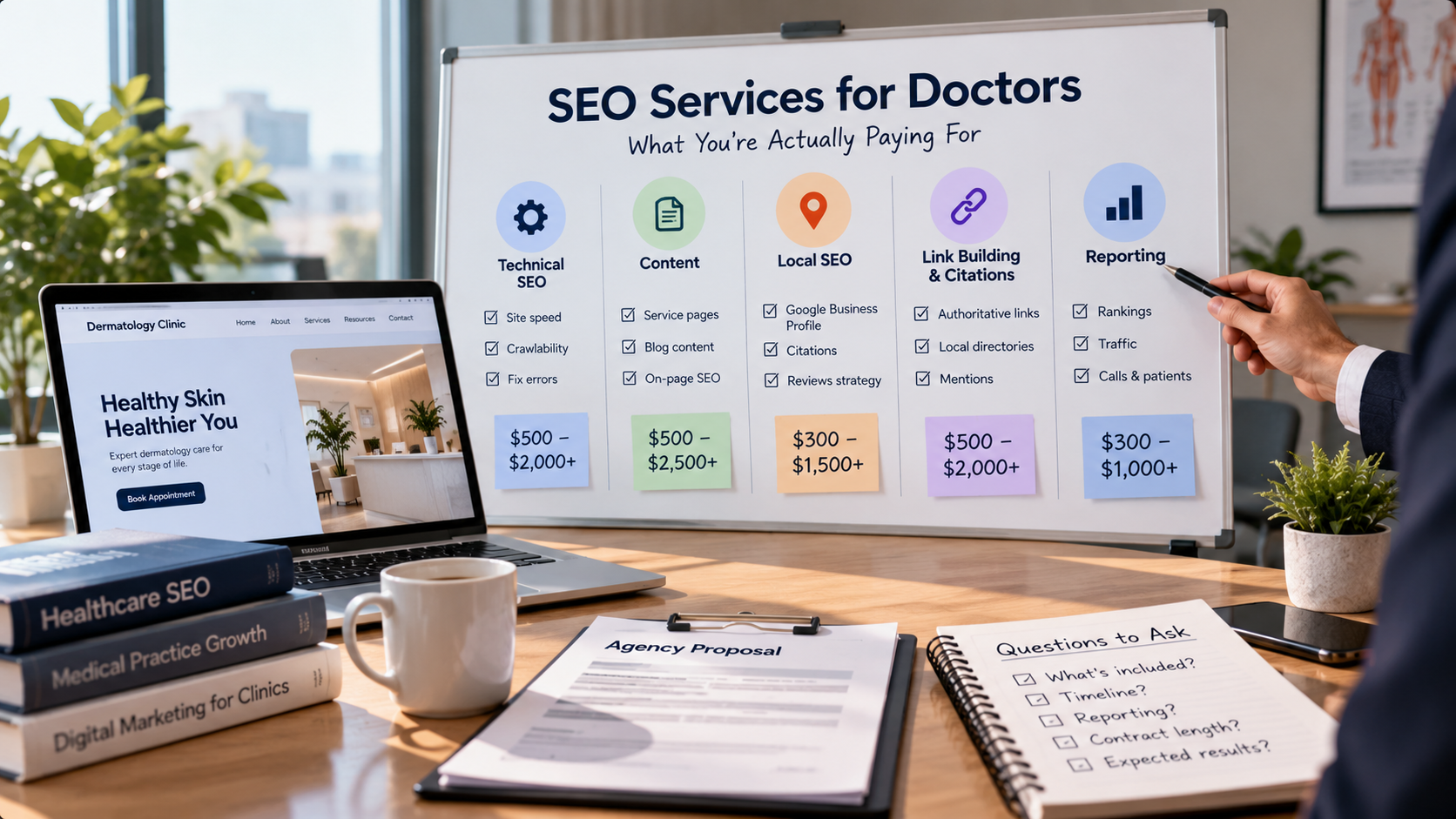
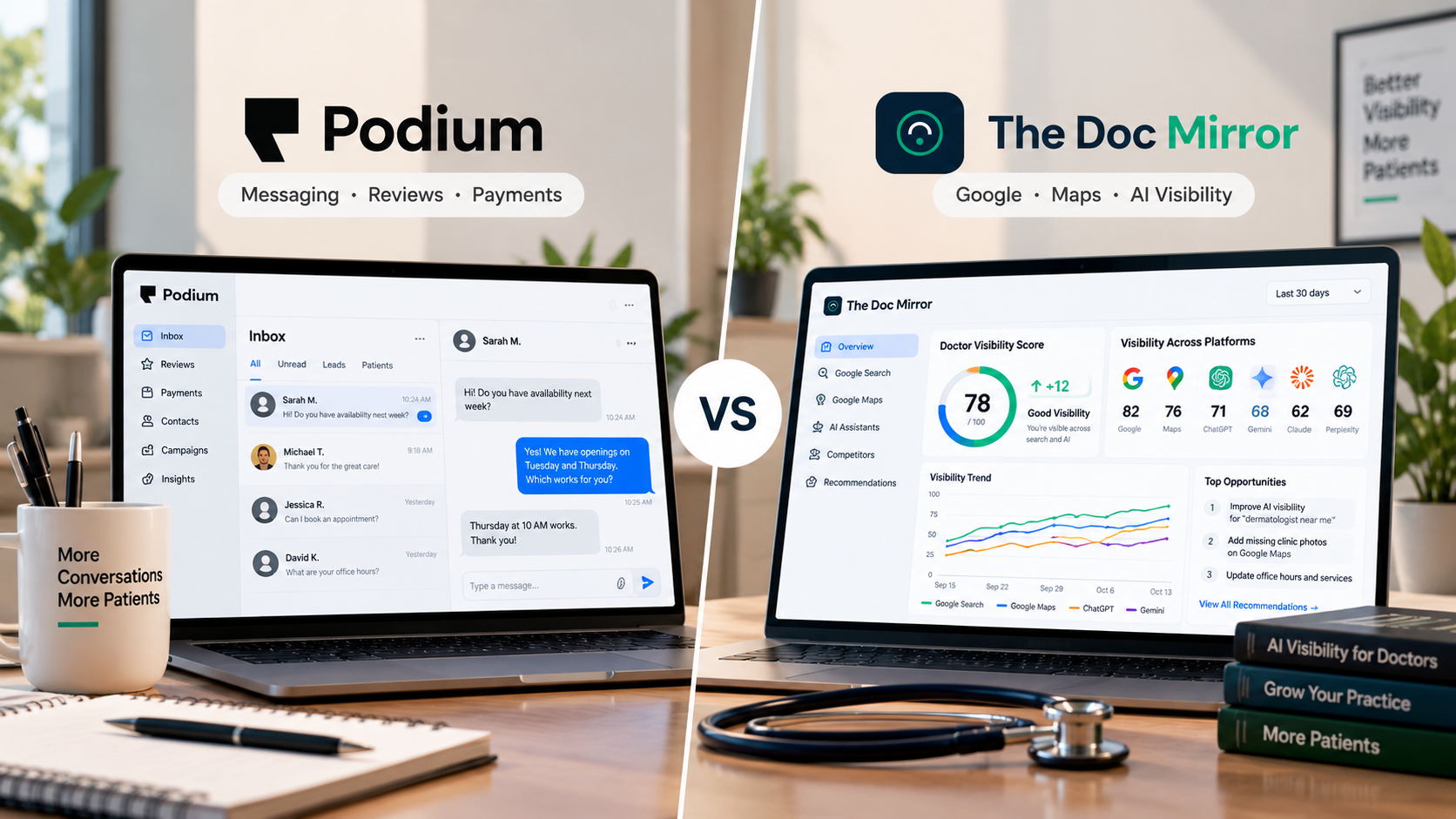
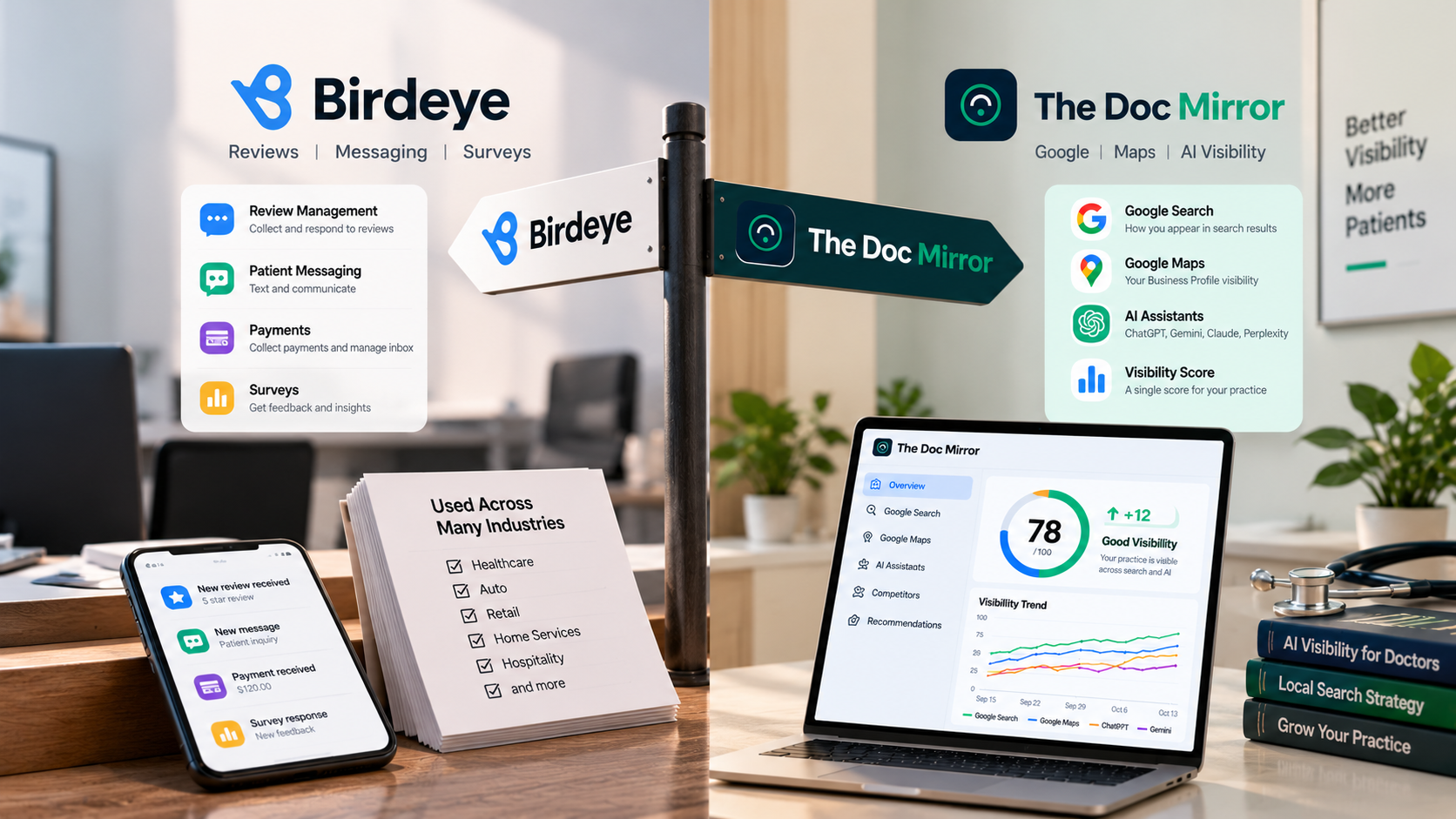
This middle path usually costs less than a full retainer with ad spend built in, because it does not include paid advertising or a team of people writing content on your behalf. Instead, it gives a practice visibility into what is happening and where the gaps are, so that the limited in-house time available gets spent on the highest-priority fix rather than a general audit. For a narrower look at how SEO specifically fits into this decision, see the article on SEO services specifically. If you are also comparing specific monitoring platforms rather than the agency-versus-DIY question, it helps to look at how specific tools compare instead, including a comparison against Birdeye.
Questions to Ask Before Signing an Agency Contract
If a practice does decide an agency is the right fit, a few direct questions before signing help separate a well-run agency from one that is not.
- What exactly is included in the monthly fee, itemized by service? A vague answer here is a warning sign. Ask for a written breakdown of hours or deliverables per service, not just a bundle name.
- Is ad spend included in the retainer, or billed separately? Many contracts quote a management fee that does not include the actual advertising budget, which can significantly change the real monthly cost.
- What does the monthly report actually show, and can I see a sample? A report full of vanity metrics like impressions, with no connection to calls or appointment requests, is less useful than it looks.
- What is the contract length and cancellation policy? Long lock-in periods with limited ability to exit are worth questioning, especially for a first engagement with a new agency.
- Who owns the website, content, and accounts if the relationship ends? This should be answered in writing before you sign, not discovered later.
- Can you provide references from a practice of similar size in a similar specialty? A results claim without a comparable reference is hard to verify.
- How do you handle AI visibility, not just traditional search rankings? This is a newer area, and not every agency has caught up to it yet. The honesty of the answer matters more than the specifics.
Asking these questions is not confrontational, it is standard due diligence, and a reputable agency will expect and welcome them.
Conclusion
There is no single right answer between hiring a healthcare marketing agency and doing it yourself. The right choice depends on your practice's size, your budget, how much in-house time you can commit, and how comfortable your team is with basic software and reporting.
A solo or small practice can cover a meaningful amount of ground with free tools and a consistent weekly routine. Where that approach breaks down is usually in ongoing monitoring, technical SEO, and newer areas like AI visibility, which are hard to track manually and easy to let slide.
See What You're Actually Working With
Before committing to a retainer or trying to track everything yourself, it helps to see where your practice currently stands. The Doc Mirror's Full Report shows how your practice appears across Google, reviews, and AI assistants like ChatGPT, so you know exactly what needs attention before you decide how to spend your time or budget. Get what you'd get from a report instead of a retainer and use it to guide whichever path, agency, DIY, or the middle option, fits your practice.
By the The Doc Mirror team